
One of the first decisions anyone makes when entering the world of cryptocurrency is which wallet to use. It sounds straightforward, but the range of options can feel overwhelming. Hot wallets, cold wallets, custodial wallets, non-custodial wallets, mobile wallets, hardware wallets , the terminology comes quickly and the stakes are high.
This guide breaks down every major type of crypto wallet in plain English, explains the key differences between them, and helps you choose the right one for your needs.
Why the Type of Wallet Matters
Before getting into the different types, it is worth understanding why this decision matters so much. Your crypto wallet is not just a place to store assets — it is the mechanism through which you control your private keys, and your private keys are what give you ownership of your cryptocurrency.
A wallet that stores your private keys securely and puts you in full control of them is a fundamentally different proposition to one that holds your keys on your behalf. The type of wallet you choose directly determines how much genuine ownership you have over your digital assets.
Hot Wallets vs Cold Wallets
The most basic distinction in the world of crypto wallets is between hot wallets and cold wallets.
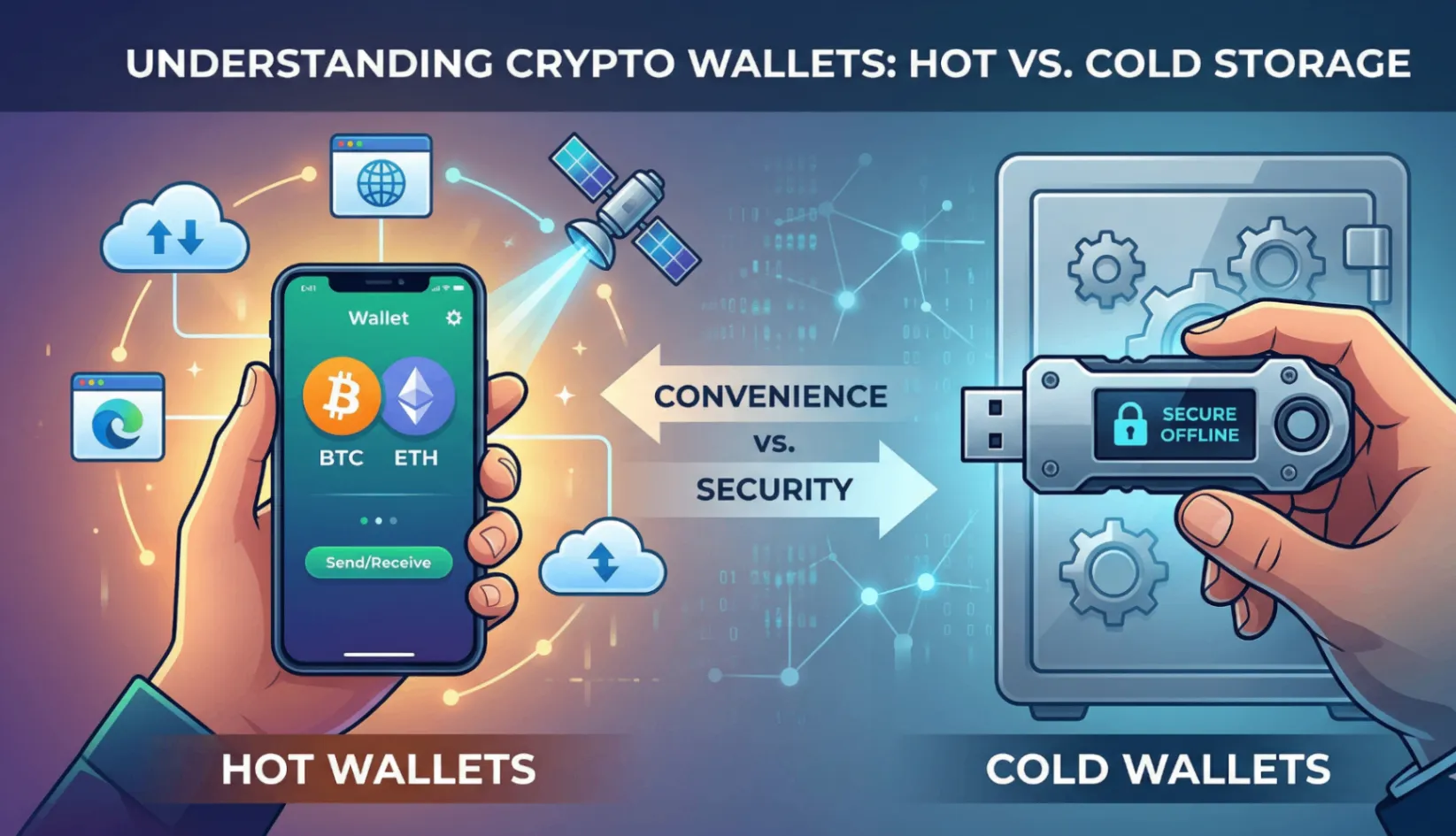
Hot wallets are wallets that are connected to the internet. This includes mobile wallet apps, desktop wallet software, and browser-based wallets. The key advantage of hot wallets is convenience — they are accessible at any time, from any location, and make sending and receiving cryptocurrency quick and straightforward.
The trade-off is that being connected to the internet introduces a degree of exposure. If your device is compromised by malware or you fall victim to a phishing attack, a hot wallet could potentially be accessed by a malicious party. This risk can be managed significantly through good security practices, but it cannot be eliminated entirely.
Cold wallets are wallets that store your private keys completely offline. Hardware wallets — physical devices that look similar to a USB drive — are the most common form of cold storage. Because they are not connected to the internet, they cannot be accessed remotely and are considered the most secure option for storing large amounts of cryptocurrency over the long term.
The trade-off with cold wallets is convenience and cost. Hardware wallets must be purchased, can cost anywhere from a few dozen to over a hundred dollars, and require additional steps when you want to make a transaction.
Custodial Wallets vs Non-Custodial Wallets
This is the most important distinction of all, and one that every crypto user must understand clearly.
A custodial wallet is one where a third party — typically a centralised cryptocurrency exchange — holds your private keys on your behalf. When you buy crypto on an exchange and leave it there, you are using a custodial arrangement. Your balance on that platform represents a promise from the exchange that they will return your funds when you ask for them.
The problem is that this promise can fail. Centralised exchanges have been hacked, have frozen withdrawals during periods of financial stress, have been shut down by regulators, and in some notable cases have simply collapsed. In every one of these scenarios, users with custodial arrangements lost access to their funds — some permanently.
A non-custodial wallet is one where you hold your own private keys. No exchange, company, or third party has access to your funds. Your cryptocurrency is controlled entirely by your keys, and your keys are stored on your device, not on anyone else's server.
KIML Wallet operates on a fully non-custodial architecture. When you create a wallet with KIML Wallet, your private keys are generated on your device and never leave it. KIML Wallet has no ability to access your funds, freeze your account, or prevent you from transacting. You have complete, unconditional ownership.
Mobile Wallets
Mobile wallets are hot wallet apps designed for smartphones. They are the most popular choice for everyday crypto users because they are free, convenient, and accessible from anywhere.
A well-designed mobile wallet like KIML Wallet provides the full range of functionality needed for daily crypto activity — from receiving and sending cryptocurrency to viewing balances and transaction history across multiple assets and blockchains. KIML Wallet is available for iOS on the App Store and for Android as a direct APK download from kimlwallet.com.
For users who are new to crypto or who need a wallet for regular everyday use, a mobile non-custodial wallet is the best starting point. It combines genuine ownership of private keys with the convenience of always having access to your assets from your phone.
Desktop and Web Wallets
Desktop wallets are software applications installed on a computer. They offer more screen real estate than mobile wallets and can be useful for users who manage larger or more complex portfolios from a desktop environment.
KIML Wallet also offers a web wallet at app.kimlwallet.com, accessible from any browser without needing to install anything. Like all of KIML Wallet's products, it operates on a non-custodial model, ensuring your private keys remain on your device at all times.
Hardware Wallets
Hardware wallets are physical devices that store private keys completely offline. They are the gold standard for long-term, high-value crypto storage. When you want to make a transaction with a hardware wallet, you connect the device to a computer or phone, approve the transaction on the device itself, and the signed transaction is then broadcast to the network. Your private keys never leave the hardware device.
Hardware wallets are an excellent choice for anyone holding significant amounts of cryptocurrency that they do not need to access frequently. They are not necessary for everyone, particularly those just starting out or holding smaller amounts.
How to Choose the Right Wallet for You
The right wallet depends on how you plan to use your cryptocurrency.
If you are new to crypto and want a simple, secure wallet to get started with, a non-custodial mobile wallet is the ideal choice. It gives you genuine ownership of your private keys with the convenience of mobile access. KIML Wallet is purpose-built for exactly this use case.
If you are holding a significant amount of cryptocurrency long-term and do not need frequent access to it, consider adding a hardware wallet to your setup for an additional layer of cold storage security.
If your crypto is currently sitting on a centralised exchange, moving it to a non-custodial wallet should be a priority. The phrase used frequently in the crypto community summarises it well: not your keys, not your coins.
Final Thoughts
Understanding the types of crypto wallets available and the key differences between them is one of the most important steps you can take as a crypto user. The distinction between custodial and non-custodial wallets in particular is not a technical detail — it is the difference between genuine ownership and a balance that depends on someone else's goodwill.
KIML Wallet is a fully open source, non-custodial crypto wallet designed for real users who want real ownership.
Download KIML Wallet:
- Android APK — kimlwallet.com
- iOS App — App Store
- Web Wallet — app.kimlwallet.com