
Starting out in cryptocurrency can feel like being dropped into a conversation that has been going on for years without you. Terms like blockchain, private key, seed phrase, and non-custodial get thrown around constantly and it can be hard to know where to begin.
This guide is written specifically for beginners. It covers everything you need to know before setting up your first crypto wallet, from understanding what a wallet actually does to the security steps that will keep your assets safe from day one.
What Is a Crypto Wallet
A crypto wallet is the tool you use to access and manage your cryptocurrency. It stores the cryptographic keys that prove your ownership of digital assets on the blockchain and allows you to send, receive, and monitor your holdings.
An important point that surprises many beginners is that your cryptocurrency does not actually sit inside the wallet. Your digital assets exist on the blockchain — a public distributed ledger maintained by thousands of computers worldwide. Your wallet holds the keys that give you access to those assets. Whoever holds the keys controls the funds.
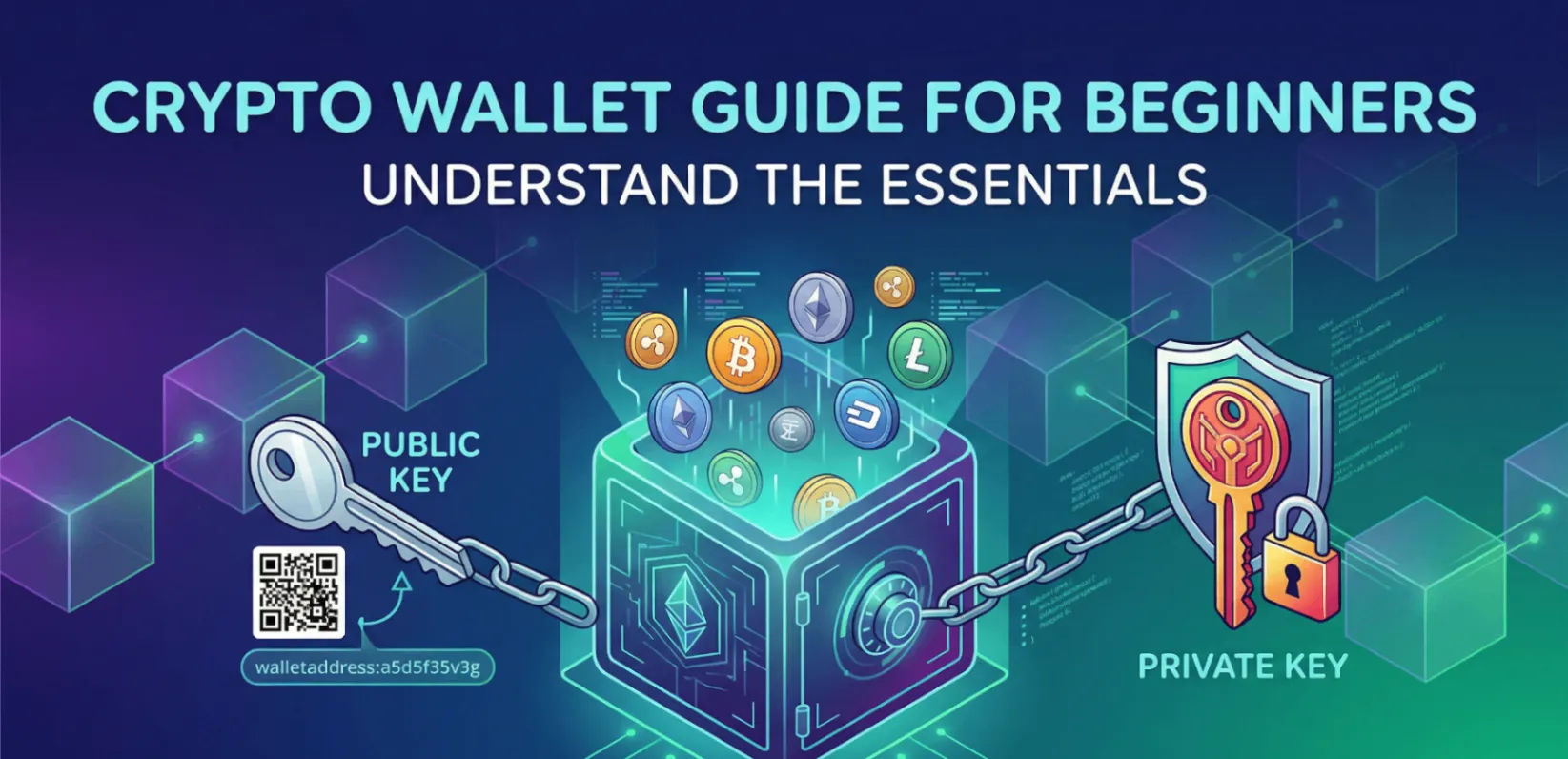
Understanding Public Keys and Private Keys
Every crypto wallet involves two types of keys, and understanding both is essential for any beginner.
Your public key is your wallet address. It functions like a bank account number or an email address. You share it freely with anyone who wants to send you cryptocurrency — sharing your public key is completely safe.
Your private key is the proof of ownership that authorises every transaction you make. It functions like a password or PIN for your entire wallet. Unlike your public key, your private key must never be shared with anyone, stored in any digital location, or given to any person or service regardless of how legitimate they appear.
A simple rule to live by as a crypto beginner: if anyone ever asks for your private key or your seed phrase, they are attempting to steal your funds. There are no exceptions to this.
What Is a Seed Phrase and Why Is It So Important
When you create a crypto wallet for the first time, the wallet generates a seed phrase — a sequence of 12 to 24 randomly chosen words that acts as the master backup of your entire wallet. Your seed phrase can recover your wallet and all your private keys on any compatible device if your phone is lost, damaged, or replaced.
Your seed phrase is the single most important piece of information in your entire crypto setup. Here is how to handle it correctly from day one.
Write it down on paper by hand the moment the wallet shows it to you. Store that paper in a secure physical location that only you can access. Never photograph your seed phrase. Never type it into any app, website, email, or cloud storage service. Consider making a second physical copy and storing it in a different secure location.
Losing your seed phrase and your device simultaneously means permanently and irreversibly losing access to your cryptocurrency. No wallet provider, exchange, or support team can recover it for you.
Choosing the Right Wallet as a Beginner
For anyone starting out, the most important distinction to understand is the difference between a custodial and a non-custodial wallet.
A custodial wallet is provided by a centralised exchange or platform that holds your private keys on your behalf. You can access your balance through their app but you are dependent on that company's security and continued operation. If the platform is hacked, shuts down, or freezes withdrawals, your funds are at risk.
A non-custodial wallet is one where you control your own private keys. No third party can access your funds, freeze your account, or prevent you from transacting. This is the approach used by KIML Wallet — a non-custodial crypto wallet available on iOS, Android, and the web, designed specifically to be accessible for beginners while maintaining robust security standards. KIML Wallet is also fully open source, meaning the entire codebase is publicly available for anyone to inspect on GitHub.
For a beginner, a non-custodial wallet is the right choice. It ensures that from your very first day in crypto, your assets belong entirely to you.
How to Keep Your Crypto Safe From Day One
Security is not something to think about later. The habits you build from the beginning will determine how safely you hold your assets for years to come.
- Guard your seed phrase above all else. It is the master key to everything in your wallet. Store it offline and never share it.
- Enable security on your wallet app. Set a PIN code and enable biometric authentication such as Face ID or fingerprint unlock. This ensures that even if someone picks up your phone, they cannot access your wallet.
- Always verify wallet addresses before sending. Cryptocurrency transactions cannot be reversed once they are confirmed on the blockchain. Copy and paste addresses carefully and check the first and last few characters before confirming a transaction.
- Only download wallets from official sources. For KIML Wallet, use the Apple App Store for iOS or download the Android APK directly from kimlwallet.com. Be cautious of links in emails, messages, or social media that claim to lead to wallet downloads.
- Be aware of phishing. Scammers frequently impersonate legitimate wallet providers, exchanges, and support teams in order to steal private keys or seed phrases. No legitimate organisation will ever ask for your seed phrase.
Your First Steps With KIML Wallet
KIML Wallet makes getting started with crypto straightforward for complete beginners. The app is free to download for iOS on the App Store and for Android as a direct APK from kimlwallet.com. A web wallet is also available at app.kimlwallet.com.
Once you install it, setting up your wallet takes only a few minutes. The setup process guides you through creating your wallet, generating and recording your seed phrase, and securing your app with a PIN or biometric lock. After that, you have a fully functional non-custodial crypto wallet with a clean, intuitive dashboard that shows your balances, transaction history, and asset performance at a glance.
From there, you can begin receiving cryptocurrency by sharing your public wallet address and start exploring everything that KIML Wallet has to offer, including multi-chain asset management and seamless crypto swaps with competitive rates across multiple providers.
Final Thoughts
Getting started with a crypto wallet is one of the most empowering steps you can take in your crypto journey. Once you understand what a wallet does, how your keys work, and how to protect your seed phrase, you have the foundation to manage your digital assets safely and confidently.
KIML Wallet is built to make that foundation as strong as possible for every beginner who steps into the space.
Download KIML Wallet:
- Android APK — kimlwallet.com
- iOS App — App Store
- Web Wallet — app.kimlwallet.com
Open Source — Explore the Code:
- GitHub: Mobile App
- GitHub: Web Wallet