

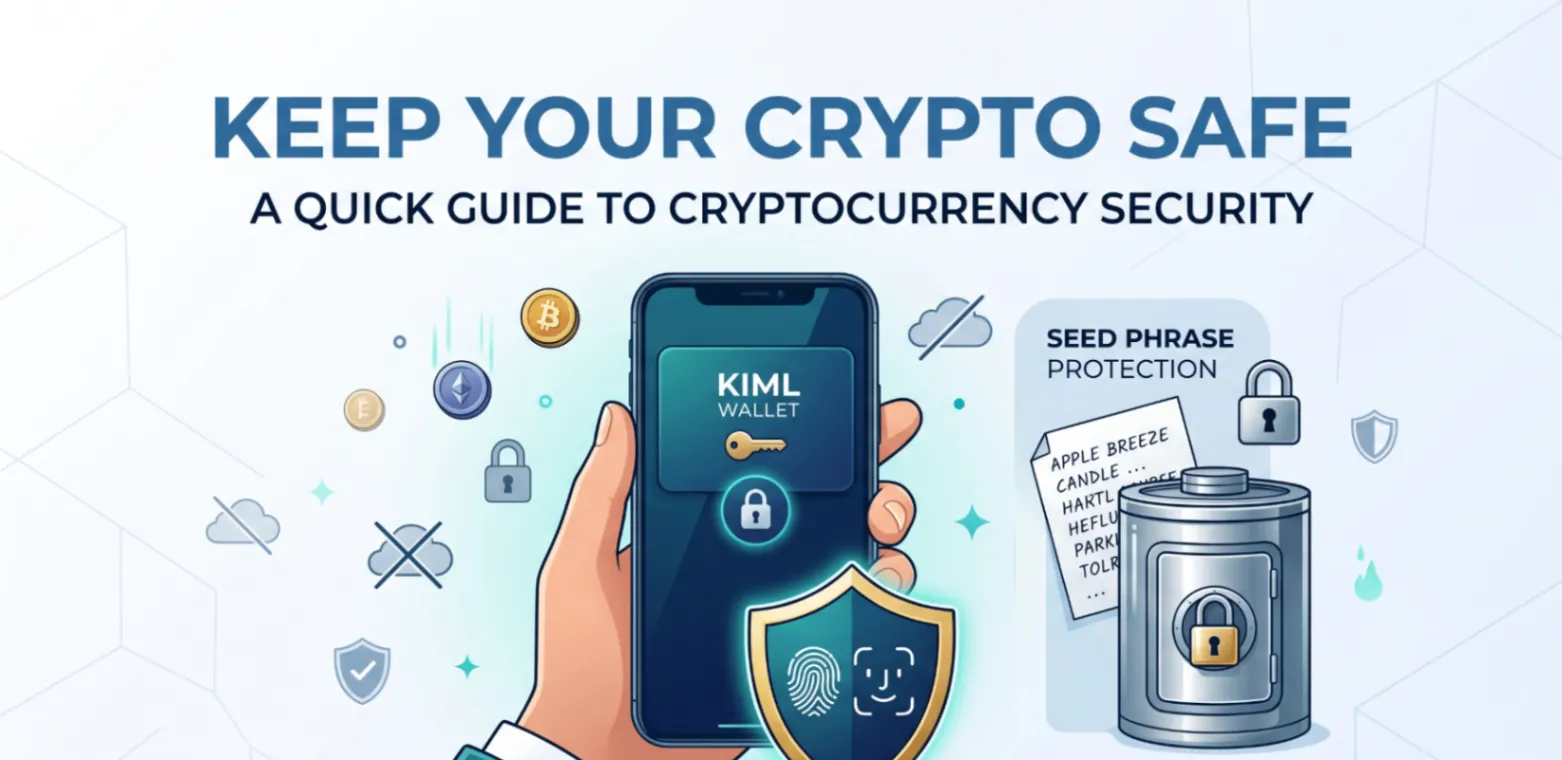
Cryptocurrency theft is one of the biggest risks in the digital asset space. Unlike a bank, there is no fraud protection, no chargeback, and no way to reverse a transaction once it is sent. If your crypto is stolen, it is gone.
The good news is that most crypto theft is preventable. Following the right security practices keeps your funds safe from hackers, scammers, and accidental loss. Here is everything you need to know.
1. Use a Non-Custodial Wallet
If your crypto is sitting on an exchange, it is at risk. Exchanges have been hacked. They have frozen withdrawals. They have collapsed overnight. A non-custodial wallet like KIML Wallet removes this risk entirely by keeping your keys — and therefore your funds — in your control alone.
2. Protect Your Seed Phrase Like Your Life Depends On It
Your seed phrase is the master backup of your wallet. Write it down on paper. Store it somewhere fireproof and waterproof. Keep multiple copies in different secure locations. Never photograph it or type it into any website or app.
The most common way people lose crypto is not through hacking — it is through losing or mishandling their seed phrase.
3. Enable Biometric Authentication
Set up Face ID or fingerprint lock on your crypto wallet app. This prevents anyone who picks up your phone from accessing your funds without your biometric data.
4. Watch Out for Phishing Scams
Scammers create fake websites, fake apps, and fake customer support accounts designed to trick you into entering your seed phrase. Always:
- Download wallet apps only from official sources (App Store for iOS, kimlwallet.com APK for Android).
- Double-check URLs before entering any wallet information.
- Never click links in unsolicited emails or messages claiming to be from a wallet company.
- Remember: no legitimate company will ever ask for your seed phrase.
5. Use a Dedicated Device for Large Holdings
If you hold significant amounts of crypto, consider keeping a separate phone or tablet used only for your crypto wallet. Do not install other apps on it. Do not use it for browsing. This dramatically reduces your attack surface.
6. Keep Your App and OS Updated
Security patches fix vulnerabilities. Always keep your wallet app and phone operating system updated to the latest version. Outdated software is a common entry point for attacks.
7. Use a Wallet Without KYC for Privacy
Wallets that require identity verification (KYC) create a link between your identity and your wallet address. For privacy-conscious users, a no-KYC wallet like KIML Wallet means your holdings are not tied to a database that could be breached or subpoenaed.
8. Verify the Wallet Code Is Open Source
A wallet you cannot inspect is a wallet you are trusting blindly. KIML Wallet is fully open source — the complete codebase for both the mobile app and web wallet is publicly available on GitHub. You can verify exactly how your keys are handled, how transactions are signed, and how your data is stored.
KIML Wallet: no KYC, non-custodial, open source, and free.
Get Started with KIML Wallet
Download KIML Wallet:
- Android APK — kimlwallet.com
- iOS App — App Store
- Web Wallet — app.kimlwallet.com